Paddyవరిधान · 7 min readనిమిషాల పఠనంमिनट पढ़ें
Zinc Deficiency in Paddy (Khaira Disease): Symptoms, Causes and Correction
Rusty patches and stunted tillers in a young paddy field are often a zinc problem, not a disease. Here is how to recognise it and fix it early.
వరిలో జింక్ లోపం (ఖైరా తెగులు): లక్షణాలు, కారణాలు, నివారణ
చిన్న వరి పొలంలో తుప్పు మచ్చలు, గిడసబారిన పిలకలు తరచుగా తెగులు కాదు, జింక్ లోపం. దాన్ని ఎలా గుర్తించి, ముందే ఎలా సరిచేయాలో చూడండి.
धान में जिंक की कमी (खैरा रोग): लक्षण, कारण और उपाय
छोटे धान के खेत में जंग जैसे धब्बे और रुके हुए कल्ले अक्सर रोग नहीं, जिंक की कमी होते हैं. इसे कैसे पहचानें और जल्दी कैसे ठीक करें, जानें.
Byరచన:लेखक: Navamitraa Agri Tech · Publishedప్రచురణप्रकाशित · Updatedనవీకరణअपडेट
ఈ వ్యాసం ప్రస్తుతం ఇంగ్లీష్లో మాత్రమే అందుబాటులో ఉంది.
यह लेख फिलहाल केवल अंग्रेज़ी में उपलब्ध है।

Key takeawaysముఖ్యాంశాలుमुख्य बातें
- Khaira disease in rice is a physiological disorder caused by zinc deficiency, not by a germ.
- Symptoms usually show on young and middle leaves a few weeks after transplanting.
- Alkaline soils, waterlogging and heavy phosphorus use make zinc less available.
- Correct early: a soil application before or at transplanting plus a foliar spray if symptoms appear.
- Always follow the dose on the product label and confirm with a soil test.
What is Khaira disease in paddy?
Khaira is the common name for zinc deficiency in rice. Although the name sounds like a disease, there is no fungus or insect behind it. The plant simply cannot get enough zinc, a micronutrient it needs for enzyme activity, protein formation and healthy root and shoot growth.
Because zinc is needed in very small amounts, many farmers overlook it. But a shortage can cut tillering, delay crop maturity and lower the final yield even when nitrogen, phosphorus and potash are applied properly.
How to identify zinc deficiency in a paddy field
Visible symptoms on the plant
- Small dusty brown or rusty spots on the middle leaves, which later join into larger patches.
- Pale or yellowish midrib on young leaves in early stages.
- Stunted plants with fewer tillers and uneven growth across the field.
- Delayed crop establishment after transplanting, with patches of weak plants.
When do symptoms appear?
Usually two to four weeks after transplanting, when the nursery reserves are used up and roots must take zinc from the soil.
How is it different from nitrogen deficiency?
Nitrogen shortage turns older leaves uniformly pale yellow, whereas zinc deficiency shows rusty spotting and patchy stunting in the field.
Why paddy soils run short of zinc
- High soil pH (alkaline, calcareous or sodic soils) locks zinc in forms plants cannot use.
- Continuous waterlogging and low organic matter reduce zinc availability.
- Very high phosphorus application can interfere with zinc uptake.
- Repeated rice-rice cropping removes zinc every season without replacing it.
- Light-textured soils with little natural zinc.
How to correct zinc deficiency in paddy
1. Soil application at planting
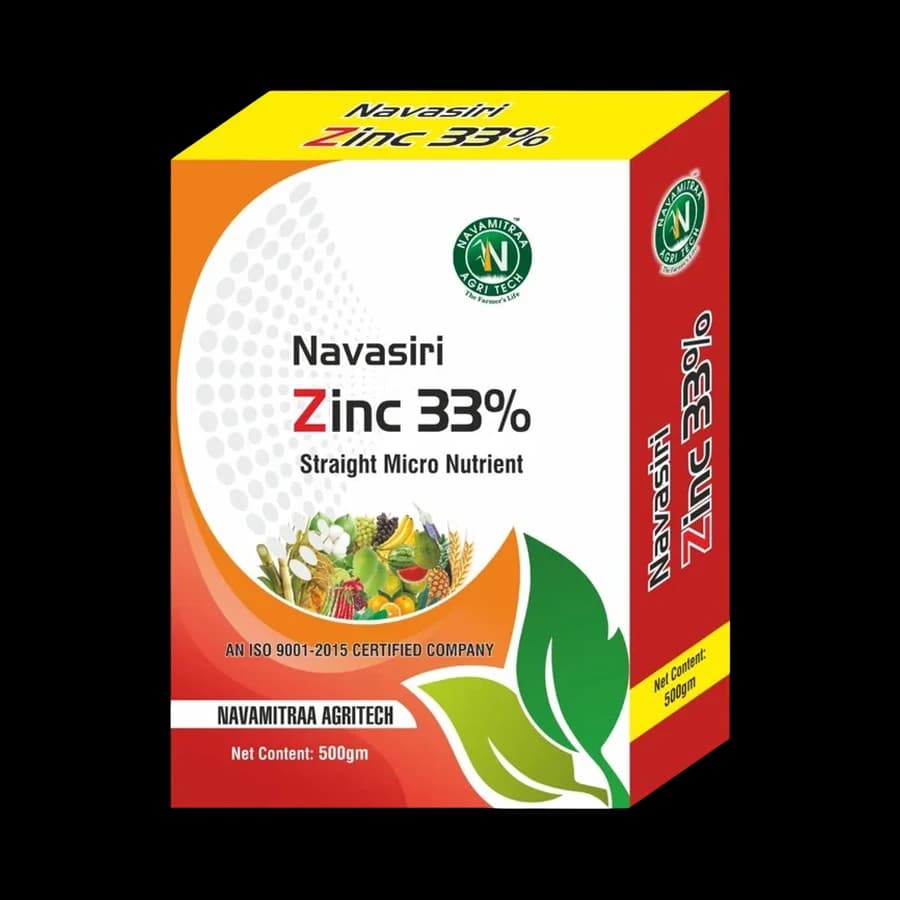
Applying a zinc source to the soil before or at transplanting builds a reserve for the whole crop. Navasiri Zinc 33% (Soil) is made for this purpose, and the recommended rate on the label is 5-10 kg per acre.
2. Foliar spray when symptoms show
If you already see rusty spotting, a foliar spray gives faster correction than soil application. Navasiri Zinc 33% is used at 3-5 g per litre of water, and Navasiri Zinc 12% (EDTA chelated) at 1 g per litre. Repeat after 7-10 days if the crop is badly deficient, as the label advises.
3. Good field practice
- Spray in the early morning or late evening, never in strong midday sun.
- Use clean water and a fresh solution each time.
- Avoid keeping the field flooded for long periods when deficiency is suspected.
- Get a soil test done so you know the zinc status before the next season.
Which Navasiri zinc product should I choose?
This article is general educational information. Always read the product label and speak to your local agriculture officer or KVK before changing your nutrient schedule.
- Navasiri Zinc 33% (Soil): granular, for basal soil application in paddy and other field crops.
- Navasiri Zinc 33%: zinc sulphate monohydrate with 15% sulphur, free-flowing, for foliar use.
- Navasiri Zinc 12%: EDTA chelated zinc for quick foliar correction at a low dose.
- Navasiri Zinc 39.5% (Zinc-Oxy): concentrated nano-particle zinc suspension, used at 1-1.5 ml per litre.
FAQs: Zinc Deficiency in Paddy (Khaira Disease)
Is Khaira disease caused by a fungus or an insect?
No. Khaira is a nutritional disorder caused by a shortage of zinc in the soil or in the plant. Spraying fungicides or insecticides will not cure it. The correct approach is to supply zinc through the soil, as a foliar spray, or both, and then maintain good field management so zinc stays available.
How soon can I expect recovery after a zinc spray?
New leaves that emerge after a correct foliar application usually look greener and healthier within one to two weeks, though existing damaged leaves will not turn fully normal. If the crop is badly deficient, the label advises repeating the spray after 7 to 10 days. Early correction matters because late correction cannot recover lost tillers.
Can I apply zinc along with DAP or urea?
Heavy phosphorus can reduce zinc uptake, so it is better not to mix large quantities of phosphatic fertiliser directly with zinc in the same application. Apply zinc as a separate soil dose or foliar spray, and ask your agriculture officer if you are planning a tank mix with other products.
Do I need zinc every season in paddy?
In soils that are known to be zinc deficient, a regular application is commonly recommended, especially in rice-rice systems where zinc is removed every season. A soil test every one or two years is the best way to decide how much zinc your field really needs.
Key takeawaysముఖ్యాంశాలుमुख्य बातें
- Khaira disease in rice is a physiological disorder caused by zinc deficiency, not by a germ.
- Symptoms usually show on young and middle leaves a few weeks after transplanting.
- Alkaline soils, waterlogging and heavy phosphorus use make zinc less available.
- Correct early: a soil application before or at transplanting plus a foliar spray if symptoms appear.
- Always follow the dose on the product label and confirm with a soil test.
What is Khaira disease in paddy?
Khaira is the common name for zinc deficiency in rice. Although the name sounds like a disease, there is no fungus or insect behind it. The plant simply cannot get enough zinc, a micronutrient it needs for enzyme activity, protein formation and healthy root and shoot growth.
Because zinc is needed in very small amounts, many farmers overlook it. But a shortage can cut tillering, delay crop maturity and lower the final yield even when nitrogen, phosphorus and potash are applied properly.
How to identify zinc deficiency in a paddy field
Visible symptoms on the plant
- Small dusty brown or rusty spots on the middle leaves, which later join into larger patches.
- Pale or yellowish midrib on young leaves in early stages.
- Stunted plants with fewer tillers and uneven growth across the field.
- Delayed crop establishment after transplanting, with patches of weak plants.
When do symptoms appear?
Usually two to four weeks after transplanting, when the nursery reserves are used up and roots must take zinc from the soil.
How is it different from nitrogen deficiency?
Nitrogen shortage turns older leaves uniformly pale yellow, whereas zinc deficiency shows rusty spotting and patchy stunting in the field.
Why paddy soils run short of zinc
- High soil pH (alkaline, calcareous or sodic soils) locks zinc in forms plants cannot use.
- Continuous waterlogging and low organic matter reduce zinc availability.
- Very high phosphorus application can interfere with zinc uptake.
- Repeated rice-rice cropping removes zinc every season without replacing it.
- Light-textured soils with little natural zinc.
How to correct zinc deficiency in paddy
1. Soil application at planting
Applying a zinc source to the soil before or at transplanting builds a reserve for the whole crop. Navasiri Zinc 33% (Soil) is made for this purpose, and the recommended rate on the label is 5-10 kg per acre.
2. Foliar spray when symptoms show
If you already see rusty spotting, a foliar spray gives faster correction than soil application. Navasiri Zinc 33% is used at 3-5 g per litre of water, and Navasiri Zinc 12% (EDTA chelated) at 1 g per litre. Repeat after 7-10 days if the crop is badly deficient, as the label advises.
3. Good field practice
- Spray in the early morning or late evening, never in strong midday sun.
- Use clean water and a fresh solution each time.
- Avoid keeping the field flooded for long periods when deficiency is suspected.
- Get a soil test done so you know the zinc status before the next season.
Which Navasiri zinc product should I choose?
This article is general educational information. Always read the product label and speak to your local agriculture officer or KVK before changing your nutrient schedule.
- Navasiri Zinc 33% (Soil): granular, for basal soil application in paddy and other field crops.
- Navasiri Zinc 33%: zinc sulphate monohydrate with 15% sulphur, free-flowing, for foliar use.
- Navasiri Zinc 12%: EDTA chelated zinc for quick foliar correction at a low dose.
- Navasiri Zinc 39.5% (Zinc-Oxy): concentrated nano-particle zinc suspension, used at 1-1.5 ml per litre.
Frequently asked questionsతరచుగా అడిగే ప్రశ్నలుअक्सर पूछे जाने वाले प्रश्न
Is Khaira disease caused by a fungus or an insect?
No. Khaira is a nutritional disorder caused by a shortage of zinc in the soil or in the plant. Spraying fungicides or insecticides will not cure it. The correct approach is to supply zinc through the soil, as a foliar spray, or both, and then maintain good field management so zinc stays available.
How soon can I expect recovery after a zinc spray?
New leaves that emerge after a correct foliar application usually look greener and healthier within one to two weeks, though existing damaged leaves will not turn fully normal. If the crop is badly deficient, the label advises repeating the spray after 7 to 10 days. Early correction matters because late correction cannot recover lost tillers.
Can I apply zinc along with DAP or urea?
Heavy phosphorus can reduce zinc uptake, so it is better not to mix large quantities of phosphatic fertiliser directly with zinc in the same application. Apply zinc as a separate soil dose or foliar spray, and ask your agriculture officer if you are planning a tank mix with other products.
Do I need zinc every season in paddy?
In soils that are known to be zinc deficient, a regular application is commonly recommended, especially in rice-rice systems where zinc is removed every season. A soil test every one or two years is the best way to decide how much zinc your field really needs.
This article is for general education. Results depend on crop, soil, weather and management. Follow the product label and consult your local agriculture officer or KVK before changing your nutrient plan.ఈ వ్యాసం సాధారణ అవగాహన కోసం మాత్రమే. ఫలితాలు పంట, నేల, వాతావరణం, నిర్వహణపై ఆధారపడతాయి. పోషక ప్రణాళిక మార్చే ముందు ఉత్పత్తి లేబుల్ పాటించండి, స్థానిక వ్యవసాయ అధికారి లేదా KVKని సంప్రదించండి.यह लेख सामान्य जानकारी के लिए है। नतीजे फसल, मिट्टी, मौसम और प्रबंधन पर निर्भर करते हैं। पोषण योजना बदलने से पहले उत्पाद का लेबल देखें और अपने स्थानीय कृषि अधिकारी या KVK से सलाह लें।